

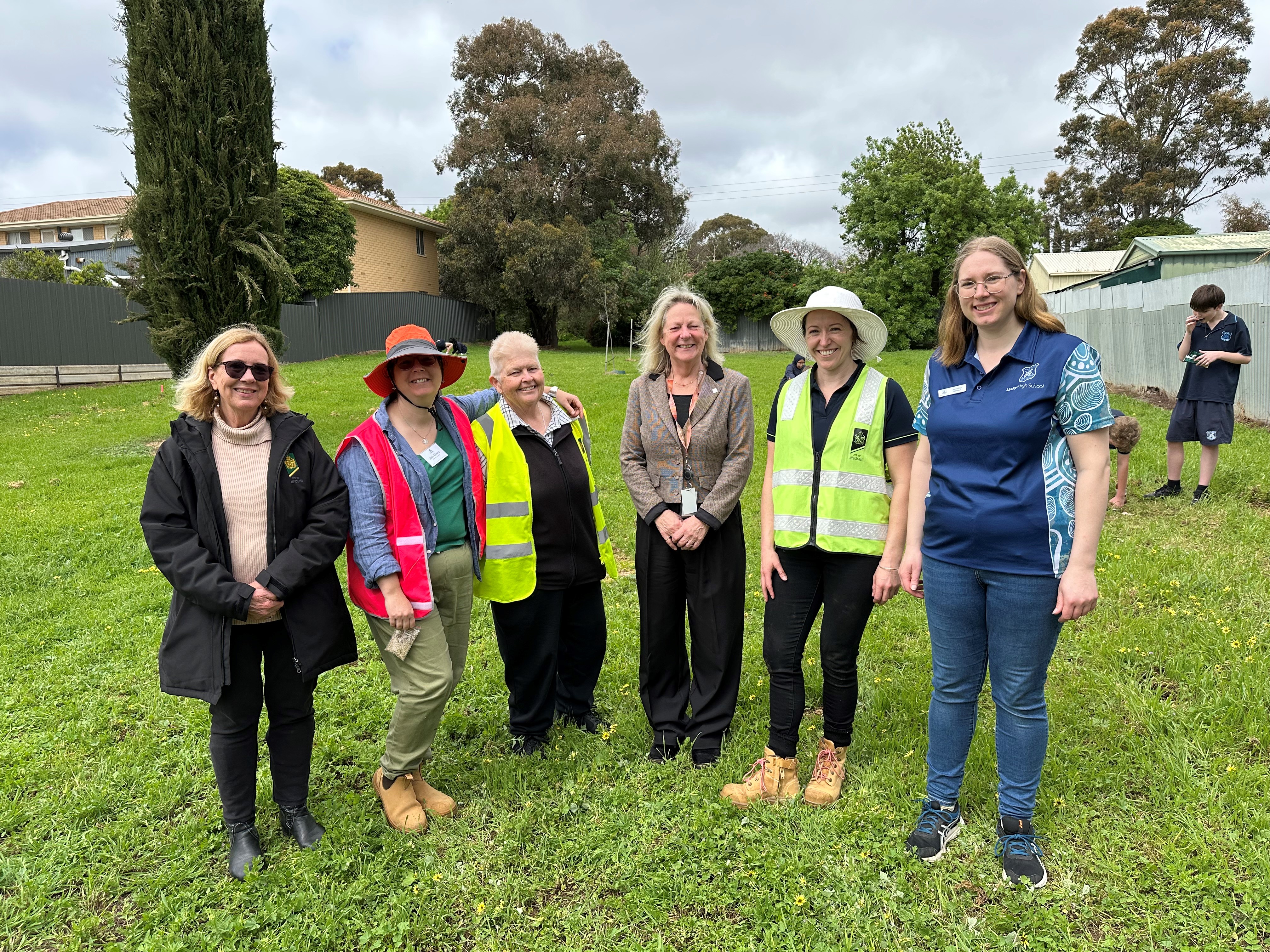
Native grasses project kicks off at St Marys
The city’s first native grasses restoration project is under way at an unused reserve in St Marys.
A group of students from Unley High School are working alongside volunteers from Pasadena and St Marys Action Group (PASMAG) and City of Mitcham’s open space team to plant grasses endemic to Grey Box Grassy Woodland at Osborne Street Reserve.
PASMAG volunteer Jody Moate said her group secured a Green Adelaide Grassroots Grant to fund the project. The group was approached by Unley High School keen to get involved in a community led environmental initiative. “Less than one per cent of Grey Box grassland is left in metro Adelaide,” Jody said. “These grasses are so important for our invertebrates, lizards, birds and insects.”
Unley High School science teacher Jennifer Gibson said her Year 7 students would gather ‘before and after’ data on invertebrates and plants to find out which species are most successful after planting. She hopes to continue the project each year across many year levels. Students began the project by marking out quadrants and setting pit traps to observe invertebrates. Next year a section of the reserve will be ‘scraped’ of weeds and re-seeded with native grasses.