
Urrbrae Wetland reeds bound for Monarto
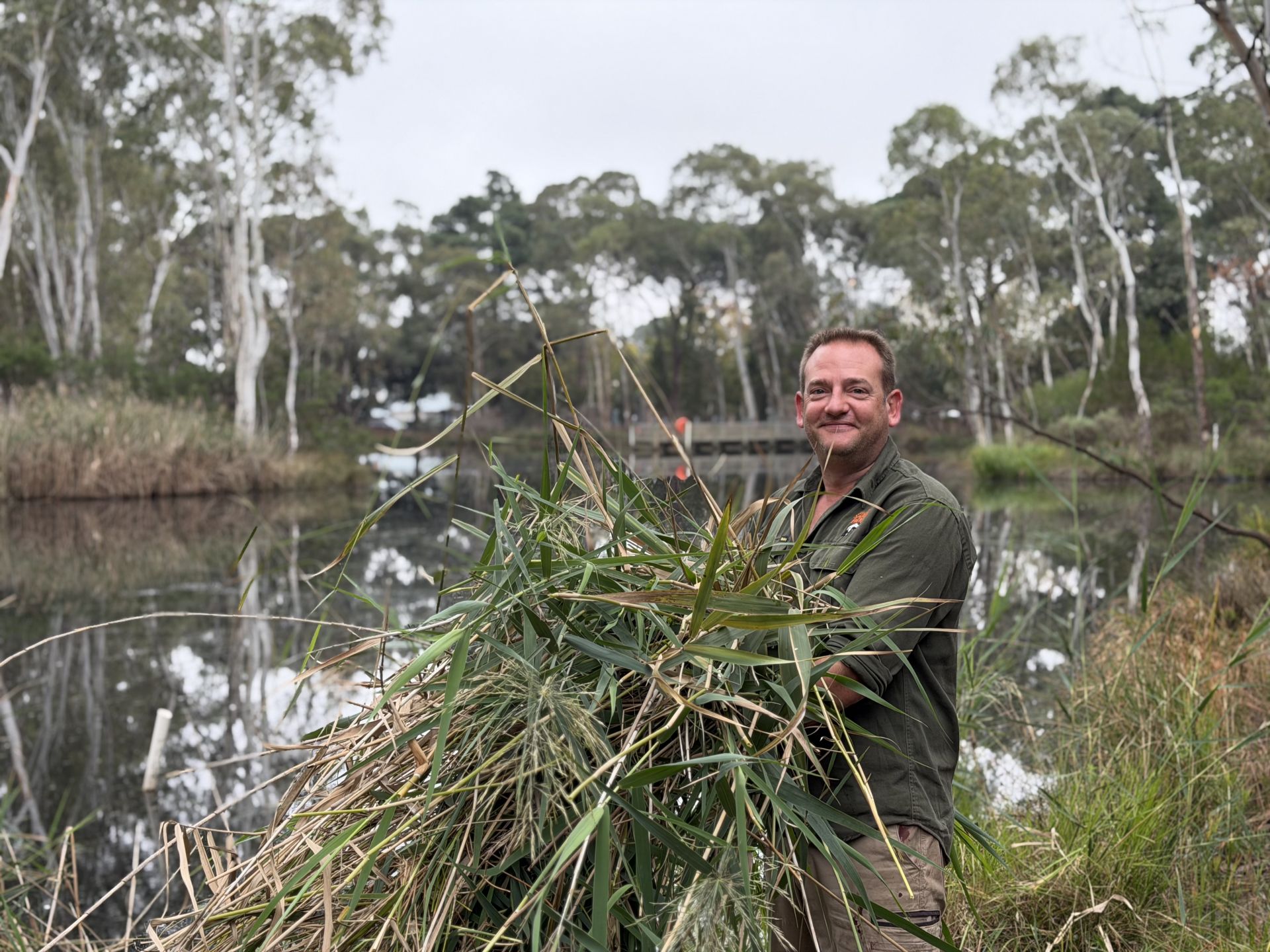
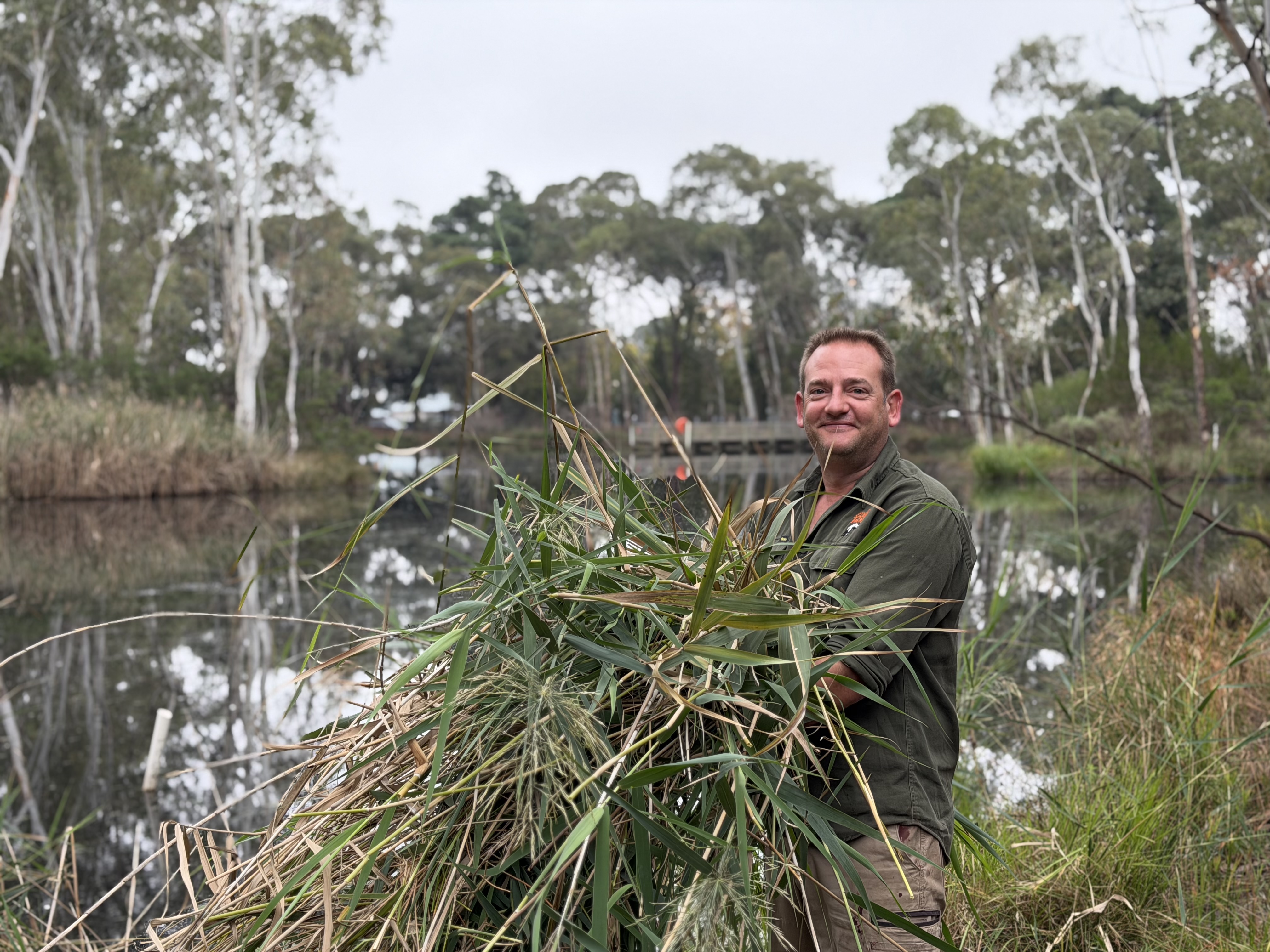
Urrbrae Wetland’s reeds are being harvested to provide fodder for Monarto Safari Park’s five new Asian Elephants.
The reeds, or phragmites, flourish along the banks of the wetland, located at Urrbrae Agricultural High School.
Reeds harvested over the past two months will contribute to the varied diet of the elephants, which each consume between 100kg and 150kg of food each day.
Monarto Safari Park Browse Coordinator Cris Katona said the elephants had responded really well to the reeds, which were now a valued part of their browse program.
“They eat a lot and at this time of year it’s harder to source ‘browse’ – anything with fresh, green foliage – because we’re in winter and a lot of our deciduous trees lose their leaves,” Cris said. “It’s a win-win because we help clear the phragmites and the elephants enjoy some fresh food.”
As part of the program, Cris collects fodder for a range of animals including primates, rhinos, giraffes, buffaloes, Przewalski’s Horses, Barbery sheep and bongos.
As well as accepting harvested material, Monarto Safari Park offers a pruning and tree removal service for Adelaide residents.
“We harvest anything from invasive species like ash, elm and bamboo to wattle, lilly pillies and palms,” Cris says. “It’s a great program and it’s rewarding because we help the community and it’s going to a good cause.”
Urrbrae Wetland Manager Vanessa Greenslade said phragmites could clog waterways and had to be cut back or removed each year.
“They provide habitat for birdlife but we need to keep them under control to make way for some of the other species we are trying to introduce to the wetland.”
Urrbrae Wetland was established in 1996 as a collaborative project between City of Mitcham and Urrbrae Agricultural High School.
The project was funded by the State Government, the City of Mitcham and the Patawalonga Catchment Water Board.
Today the wetland serves as an education centre as well as a flood prevention catchment and haven for native wildlife including more than 50 bird species.