

Learn how individuals and households can prepare for bushfires and build emergency resilience by staying informed, safeguarding your property, and working with your community to enhance safety and preparedness.
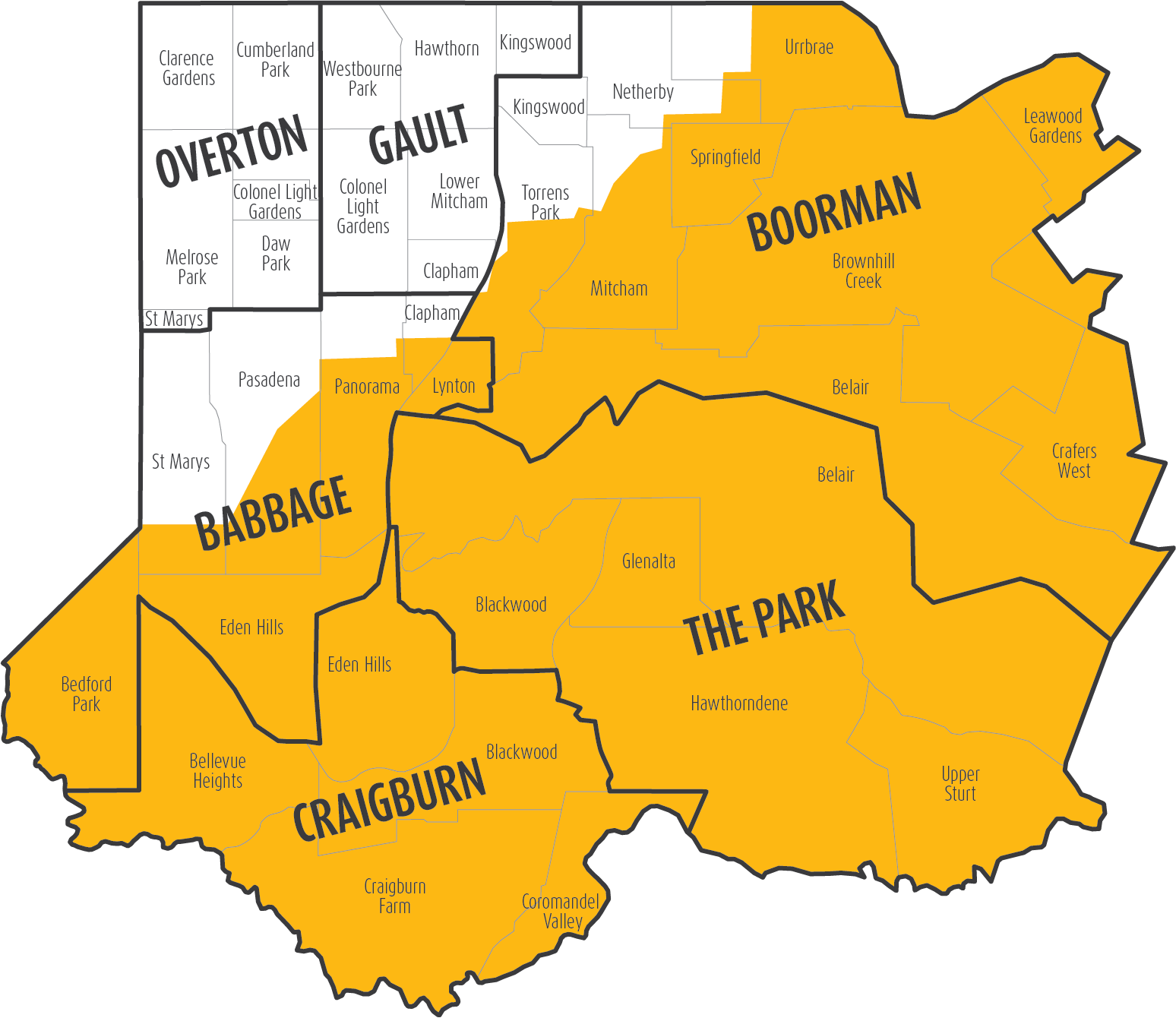
Bushfire prone areas and bushfire safer places and last resort refuges
West
South Road
North
Ayliffes Road, Fiveash Drive, Goodwood Road, O'Neil Street, Strathcoma Avenue, Barretts Road, Belair Road, Blythewood Road, Old Belair Road, Taylors Road, Fullarton Road, Delamere Avenue, Waite Road, Cross Road.
East
South Eastern Freeway, Council's eastern boundary.
South
Sturt River
Download Living in a High Fire Prone Area
Bushfire safer places
If you live, work or travel in an area where bushfires can happen, and your bushfire survival plan is to leave early (on or before a bad fire day), you need to find a place to move to.
The CFS has two categories of places that provide relative safety in a bushfires: bushfire safer places and last resort refuges. It’s important you know what these are, where they are, and what risk you take if you use one of these options during a bushfire.
Investigating community centres as refuges
Council received information on ways community centres could be made available as a place of refuge on extreme and catastrophic fire danger days to allow residents to seek refuge with their family and domestic pets.
Read item 14.2 Fire danger days places of refuge 13 December 2022
How to develop a bushfire survival plan
Thinking ‘I’ll leave early’ is not enough. You must prepare to act and survive.
- Most people who die during bushfires in our state are caught when they flee their homes at the last minute. Preparing your plan helps you to understand the signs to leave early or prepare to actively defend your property.
- Bushfires can be scary and overwhelming. This isn’t the time to make major decisions. Preparing your plan helps you make decisions in advance, and will keep you focused to make better decisions if there's a bushfire threat.
- During a bushfire, you’ll be worried about your loved ones. Preparing and practising your bushfire survival plan helps family members learn where others are and what they’ll be doing.
- You might find you don’t have the clothing, equipment or resources to carry out your plan to leave early or stay and defend at the last minute. A prepared and practised bushfire survival plan helps identify what you need.
- Bushfires are unpredictable and even the best plans can go wrong. Include contingencies and back-ups in case your primary plan fails. Write down and practise your plan for the best chance to survive a bushfire.
View the CFS Bushfire Survival Plan
The CFS recommends seven essential steps to help you survive a bushfire. We encourage you to review these as part of developing your Bushfire Survival Plan.
- Writing and practicing your Bushfire Survival Plan.
- Understanding bushfire behaviour.
- Recognising and plan for high fire danger days.
- Preparing your home and property.
- Creating emergency kits.
- Acting on days of high fire danger.
- Consider your physical and emotional preparation.
Your Bushfire Survival Plan should include:
- Contact numbers.
- Plans to leave early or to stay and defend.
- Actions to prepare your property ahead of the bushfire season.
- Action to prepare emergency kits.
Preparing your property
We help residents prepare their property for the bushfire season with free green organics drop-off days at the Lynton Green organics drop-off facility.
If you don’t do your fire hazard reduction work before fire danger season starts, we might issue you with a $315 fine (Section 105F Notice under the Fire and Emergency Services Act 2005). Our contractors will then do the required work at your cost.
Clear access let's firetrucks to move safely. Make sure your gateways are at least 3m wide with 4m of vegetation clearance. Roadways should have a well-compacted surface, with slopes no steeper than 1m rise for every 4m, and solid crossings over waterways.
Driveway bends need a minimum internal radius of 9.5m and an external radius of 12.5m. Make sure there’s enough space for firetrucks to turn around on your property. This helps firefighters drive in, turn safely with minimal manoeuvres, and face forward to leave quickly if needed during active firefighting.
Where and how you park your vehicle is even more of an issue during the bushfire season.
If the way you park impacts access to fire tracks, traffic or the most direct route to a fire, you’re putting lives and homes at risk.
When you park your vehicle, make sure there’s at least 3m of road clearance alongside your car to let other cars pass. This is required by law and you may save a life!
Mains-fed electricity can be interrupted because of faults, fire damage, or because supply is off to reduce the risk of bushfires starting. After the Ash Wednesday bushfires, legislation was introduced to let SA Power Networks turn off power to reduce the chance of a fire starting.
If you live or work in a bushfire prone area and plan to stay, you need to consider what you will do if the power goes out including having a battery-operated radio, keeping mobile devices fully charges, opening electric gates or roller doors or working out alternative power for pumping water and using firefighting equipment.
How to protect your pet in an emergency
- Include pets in your bushfire survival plan
- Prepare your pet emergency kit
- Practice your plan
How to prepare your pet emergency kit
The kit should include:
- Registration certificates
- Vaccination certificates
- Transportation equipment (cages/carriers/crates/horse floats etc)
- Cat litter and tray
- Poo bags for dogs
- ID tag (including pets name and your mobile phone number), collars, leads, harnesses, saddles etc
- Food and water bowls, and at least one week’s supply of non-refrigerated food
- Medications and clear instructions for treatment of any medical conditions
- Blankets/bedding/nesting material
- Toys/enrichment devices
- Photograph of your pets (including names) in sealed plastic bags
Contact details for your vet, local animal shelter, local council, and alternative animal accommodation facility